Float-on, float-off: how a jack-up gets onto a semi-sub
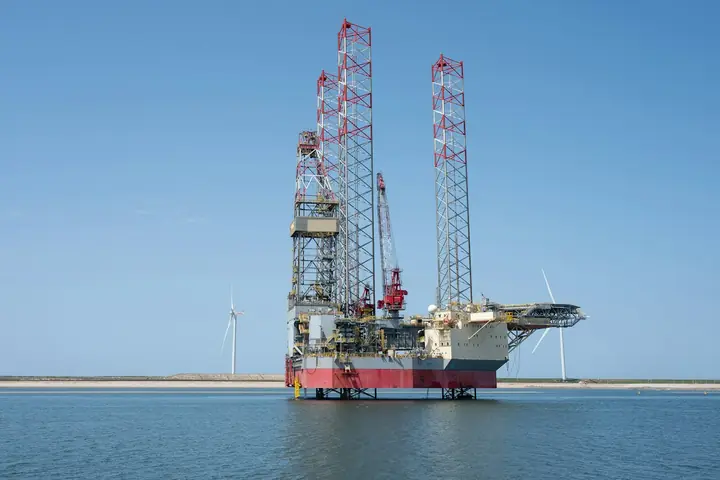
Most jack-ups aren't built to cross oceans under their own power. When one has to change regions, the choice is usually between towing it (a wet tow) or carrying it on the deck of a semi-submersible heavy-transport vessel (a dry tow, or dry transport). Several recent moves show both options in action.
Four recent moves
- VALARIS 106, Singapore to Indonesia. As reported by HMT News (Sept 2026, citing AIS data from 10 September), Boskalis' 117,000-tonne bowless semi-sub BOKA Vanguard carried the jack-up from Singapore to Kokas, Indonesia, with an ETA of 15–16 September. The rig is heading for a two-year BP contract worth roughly US$74 million.
- Valaris 104, wet tow then dry. Offshore Magazine (17 Sep 2026) reports that the rig was wet-towed through the Strait of Hormuz and then loaded onto a heavy-lift vessel for Batam, where it is to be converted into a MOPU (mobile offshore production unit) for the Mako gas field. One move, both methods.
- Ralph Coffman, offshore Mexico. A LinkedIn post by Inchcape Shipping Services in Mexico (16 Jul 2026) describes an offshore float-on of the VALARIS jack-up onto Boskalis' Blue Marlin off Seybaplaya, Campeche, and the agency, customs and MWS coordination behind it. It's the port agent's own account, not independent news.
- Not a rig, same principle. As reported by HMT News (9 Oct 2026), the semi-sub Forte float-loaded SpaceX's recovered Starship near Christmas Island and delivered it to Brownsville after a 12,729 nm voyage. Different cargo, but the same float-on and seafastening job.
How a float-on works
A semi-submersible heavy-transport vessel can ballast down until its cargo deck is under water. The floating cargo is then manoeuvred into position over the deck, usually with tugs and winches. Once it's lined up over the cribbing, the vessel pumps out ballast and rises, lifting the cargo clear of the water. Float-off is the same in reverse.
It sounds simple. In practice, it's a planned marine operation with very little margin for error.
Ballast and weather windows
- Ballast plan. The vessel's crew follow a ballast sequence worked out in advance, so the vessel stays stable while the deck goes down and comes back up with the load on it.
- Water depth. The site needs enough depth for the submerged deck plus the draught of the cargo. That's why float-ons often happen at a sheltered anchorage rather than alongside.
- Weather window. Positioning the cargo over the deck needs calm conditions. The operation is planned around a forecast window with set limits for wind, waves and current, and it doesn't start if the forecast won't cover the whole job.
- Clearances. For a jack-up, the legs and any overhang need to clear the vessel's structure, and the hull needs to land on the cribbing where the design says it should.
Cribbing and seafastening
- Cribbing is the support the cargo sits on, laid out on deck before the float-on. It spreads the load into the vessel's structure and has to match the cargo's strong points.
- Seafastening holds the cargo in place for the voyage, usually with welded steel stoppers and braces. It's designed against the motions expected on the route, so a longer or rougher route can mean more steel.
- Both are engineered and drawn up before the job, then checked on the day. Welding can't start until the cargo has landed and been surveyed.
Surveyor and MWS sign-off
A marine warranty surveyor (MWS) is usually appointed on behalf of the insurers. They review the engineering (stability, ballast plan, cribbing and seafastening design, weather limits) before the job and attend the operation. The vessel shouldn't sail until the MWS issues a certificate of approval.
The Ralph Coffman post is a reminder that a float-on also needs an agent, customs formalities and port coordination on the ground, not just engineering.
Wet tow or dry transport?
There's no single right answer. The Valaris 104 move used both. Points that usually decide it:
- Distance and route. Long ocean passages favour dry transport. Short or coastal moves may suit a tow.
- Weather and season on the route, and what the tow or transport can be approved for.
- Time. A heavy-transport vessel usually moves faster than a tow.
- Vessel availability and cost of a suitable semi-sub against tugs for the duration of a tow.
- Insurance and MWS requirements for each option.
- What happens at the other end, for example a yard conversion like the Mako MOPU.
A quick checklist for a dry transport
- Cargo data: weight, centre of gravity, dimensions, leg positions and strong points.
- Vessel suitability: deck size, submersion depth and stability with the cargo.
- Load-out site: depth, shelter, permits and agency.
- Engineering: ballast plan, cribbing layout, seafastening design and motion criteria.
- MWS appointed early, with the engineering submitted for review.
- Weather criteria and forecast service agreed.
- Customs, port and agency formalities at both ends.
- Float-off plan at the destination.
Sources
- HMT News, BOKA Vanguard transports VALARIS 106 to Indonesia, Sept 2026. Read the source
- Offshore Magazine, Rig roundup: Noble, Borr and Transocean win drilling contracts while Valaris assists in Mako project, 17 Sep 2026. Read the source
- Inchcape Shipping Services (Mexico), LinkedIn post, ISS Mexico supports transport of VALARIS jack-up Ralph Coffman aboard Blue Marlin, 16 Jul 2026. Read the source
- HMT News, Boskalis Forte completes Starship transport, 9 Oct 2026. Read the source
HMT News says its articles are AI-assisted and edited, so we attribute its facts as "reported by" and you should check them before relying on them. The Inchcape item is a company LinkedIn post, not independent news.
The "how it works" sections describe general industry practice. They're not a method statement. Every float-on is engineered for its own cargo, vessel and site.